In the event that a major snow storm takes place in our area, here are some important tips to remember:
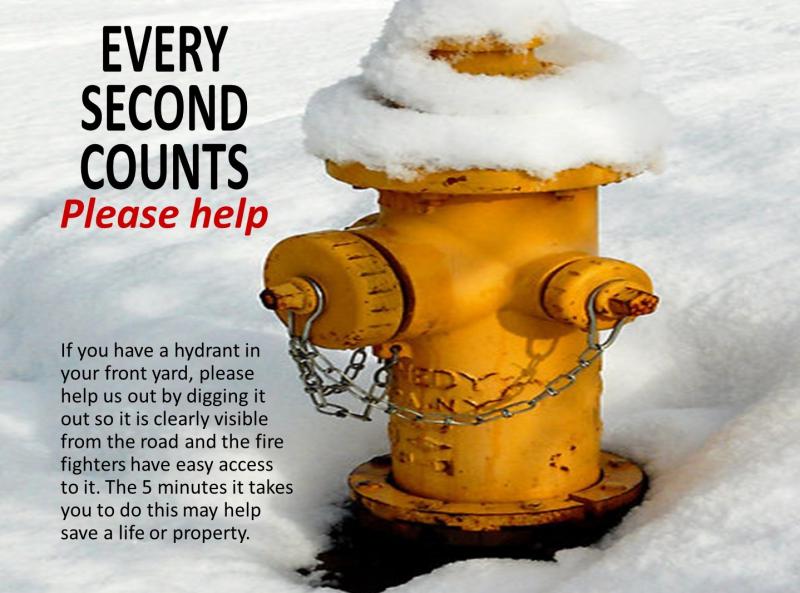
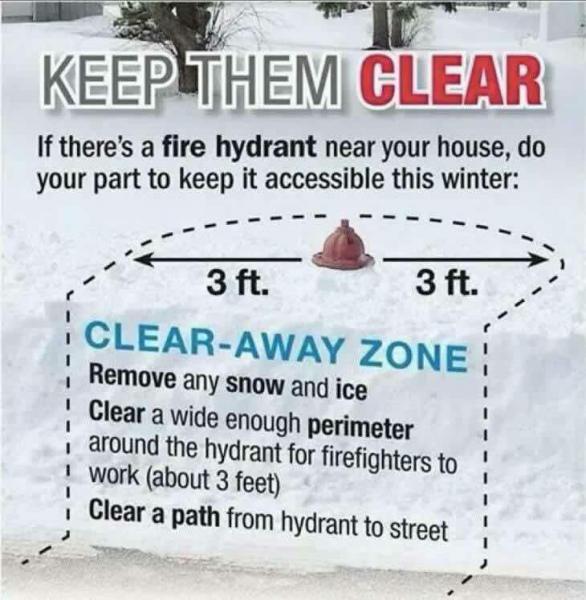
Keep hydrants shoveled out and clear in case of a fire emergency. About 3 ft around the hydrant, under the valves and connection fittings to the ground, and a path out to the street. If a hydrant is not cleared out and covered with snow and ice, it would take firefighters extra time to clear the hydrant, greatly interfering and delaying firefighting operations. In an actual fire, seconds count. Those who are physically able, could help to keep hydrants clear in their neighborhood. Also remember that parking within 15 ft of a hydrant is a violation and would impede getting water to a fire location.
When using portable generators in a power outage, be sure to keep the generator exhaust outside and the area around it well ventilated. Never operate a generator inside a building. When re-fueling, let the generator sit in the off position until it cools. Never run an extension cord from the generator to your household electric outlets, as this could back-feed and injure linemen working on the power lines. Each generator is rated for a maximum amount of power. Be sure to know the maximum limit and what appliances, heaters, and lights you are able to use.
It is also a good idea to keep your cars gas tank filled, keep cell phones charged, have fresh batteries for flashlights and portable radios, and plenty of bottled drinking water. Remember the pets as well and what they may need.
As always, we suggest that you have a working smoke alarm and carbon monoxide alarm in your home, a fire extinguisher, and practice E.D.I.T.H. (Exit Drill In The Home) with children, so the little ones know what to do in the event of fire.
And now for a little history...the most severe snow storm in Chester County took place in 1958, known as "The Blizzard of 58," in which four consecutive major snow storms arrived, with the last one bringing hurricane force winds which knocked power out for about two weeks. The only vehicles able to move were bulldozers and military vehicles. The official recorded snow accumulation in West Chester, Pa. was 73.5 inches by the National Weather Service. Hopefully we won't see anything like that again, but it is a good idea to be prepared for whatever arrives. |


 Add a Comment
